
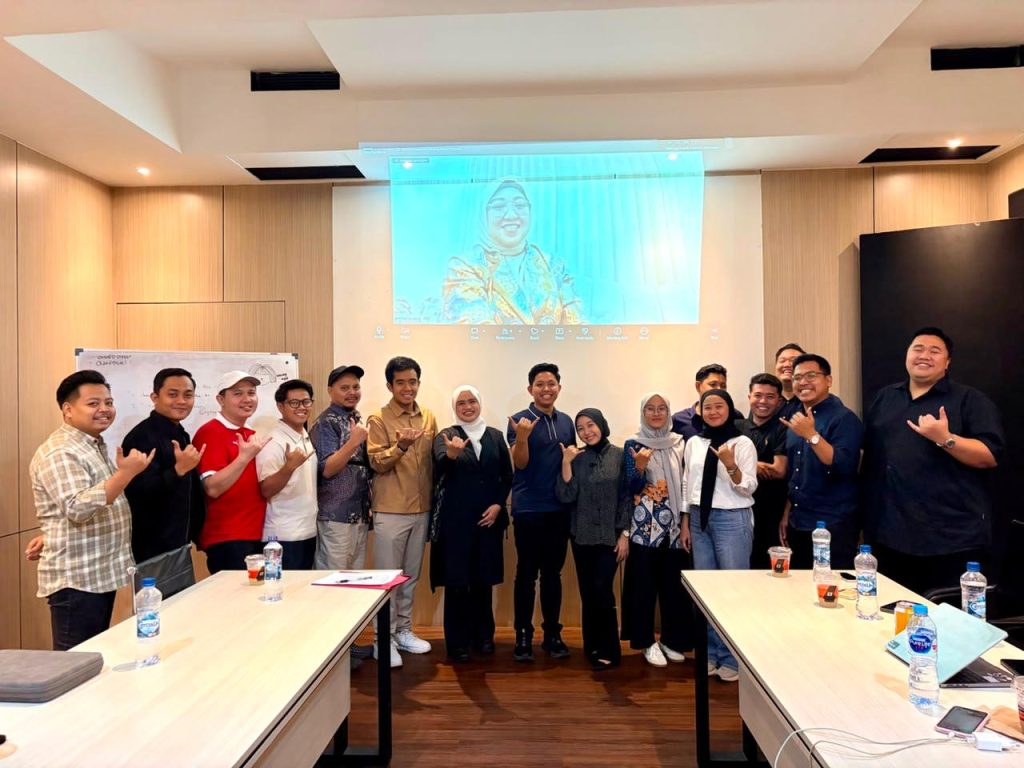
Jakarta, Indonesia — The Islamic World Development Network (IWDN) is strengthening its strategic direction by expanding organizational development and international partnerships. During a strategic meeting held on August 2, 2026, IWDN discussed several priority agendas, including the development of study exchange programs, stronger public relations, expanded international cooperation, and new initiatives in education and the global halal economy. The meeting emphasized one central message: having a network is not enough. IWDN must transform its connections into meaningful programs, strategic collaborations, and tangible impact.
From Networks to Action?
One of the key priorities discussed was the development of a study exchange program, which was identified as having strong potential to become one of IWDN’s flagship initiatives. The program is expected to provide students and academics with greater access to international educational experiences while creating opportunities for sustained academic and institutional partnerships. Beyond academic mobility, the initiative is envisioned as a gateway for building broader and more sustainable networks among universities, scholars, students, and institutions across the Muslim world. International exchange is not merely about sending participants abroad. It is about building bridges between institutions, exchanging knowledge, and creating long-term opportunities for collaboration. The meeting also highlighted the strategic importance of Public Relations (PR) in strengthening IWDN’s institutional presence. IWDN has considerable capacity to initiate and facilitate international programs. However, strong programs require equally strong communication strategies. The organization needs to address not only the question of “What does IWDN do?”, but also “What happens after the program, and how can its impact be communicated to the public?”. For this reason, IWDN needs a communication system capable of documenting, presenting, and strategically disseminating its programs and achievements. Strengthening PR is expected to increase IWDN’s visibility while creating greater opportunities for collaboration with national and international institutions.
This also raises an important strategic choice for the organization: whether to remain focused primarily on internal activities with limited public visibility, or to build a stronger institutional profile so that its programs generate greater visibility, impact, and strategic value. The establishment of a dedicated PR team or coordinator was therefore identified as an important organizational priority. International cooperation was another major focus of the discussion. One of the most important elements in establishing sustainable partnerships is the existence of a clear and mutually agreed framework between the parties involved. At the same time, international universities and institutions may encounter difficulties in navigating Indonesia’s administrative and bureaucratic systems. This situation presents an opportunity for IWDN to assume a strategic role as a facilitator, connector, and bridge-builder between international institutions and Indonesian stakeholders. Indonesia offers a large and promising market for international partners. Yet, bureaucratic complexity remains one of the challenges that must be addressed. Therefore, strengthening human resources (HR) is essential for IWDN to identify emerging opportunities, understand partners’ needs, map potential collaborations, and develop initiatives that remain aligned with the organization’s vision and mission. Another promising area discussed was the development of international student internship programs. Such programs are considered relatively feasible to initiate, particularly through formal communication and official applications to prospective host institutions. Saudi Arabia was identified as a particularly strategic destination. A number of Saudi universities attract Indonesian students, while the Indonesian Students Association network in Saudi Arabia, particularly in Makkah and Madinah, offers valuable potential for future collaboration. This network could serve as an important entry point for IWDN to develop programs involving academic exchange, youth engagement, research collaboration, knowledge sharing, and social initiatives. The opportunity demonstrates how existing student networks can be transformed into institutional bridges connecting Indonesian and international academic communities.
Expanding into the Global Halal Economy
Beyond education, IWDN also sees the economic sector as an important area for international collaboration. Exchange programs could be expanded beyond student mobility to include the exchange of experiences, business opportunities, and international market access. One of the ideas discussed was the organization of an International Expo at the beginning of the year, focusing on themes such as halal products and halal certification. The halal sector continues to attract significant attention internationally, including in the United Arab Emirates (UAE). This creates opportunities for IWDN to collaborate with various stakeholders, including Dekranasda, in promoting local products to wider international markets. The initiative could also be expanded through international halal product bazaars and export promotion programs in collaboration with Indonesian Embassies (KBRI) and Indonesian Trade Promotion Centers (ITPC) in various countries.
Under this model, IWDN could contribute its international networks and participant base, while strategic partners provide products, promotional support, and market access. Such collaboration could bring together networks, products, markets, and international opportunities within a single collaborative ecosystem. Amid the various ideas discussed, the meeting delivered a clear strategic priority: it is time to move from ideas to action. IWDN does not have to wait for large-scale programs to create meaningful impact. Small, realistic initiatives that can be implemented in the near term can serve as important first steps in establishing the organization’s track record and credibility. Each division is therefore expected to develop a program framework outlining its proposed activities, expected targets and outputs, potential partnerships, resource requirements, and necessary follow-up actions. This approach is intended to transform ideas into concrete, measurable, and actionable programs.
The strategic meeting marked an important moment for IWDN as it moves toward a new phase of organizational development. IWDN is not merely positioning itself as a network that connects individuals and institutions. It is seeking to become a platform for meaningful collaboration, international engagement, and tangible impact. By strengthening its academic networks, student communities, government partnerships, economic initiatives, and international relationships, IWDN has significant opportunities to develop cross-border programs that connect Indonesia with the wider Muslim world and global community.
Because a network without action is merely a connection. But when networks become collaboration, and collaboration creates impact, an organization begins to create lasting meaning.
IWDN is moving forward — from networking to collaboration, from ideas to action, and from action to impact.
WhatsApp us