
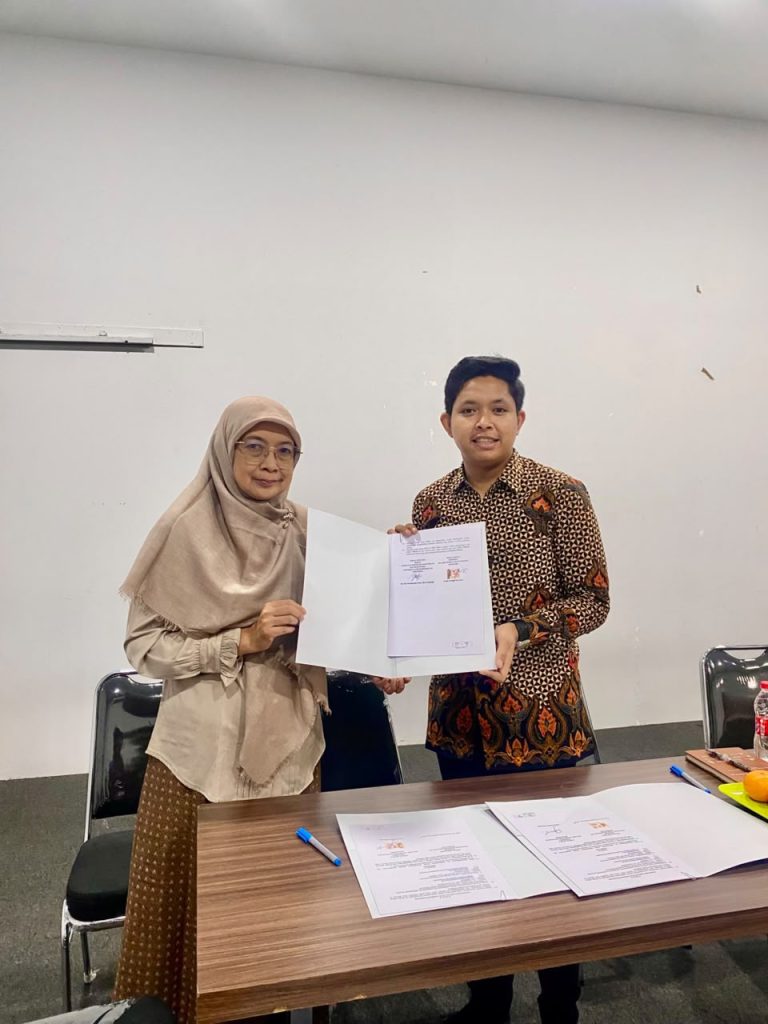
Bekasi, Indonesia, October 27, 2026 — The Indonesia World Development Network (IWDN) and Universitas Muhammadiyah Indonesia (UM.ID) have formalized a strategic partnership through the signing of a Memorandum of Understanding (MoU) on collaboration in the implementation of the Four Pillars of Higher Education and the development of the Impactful Campus Program.The partnership aims to expand access to basic education for Indonesian children attending learning centers in Malaysia through an International Community Service Program (KKN), while strengthening collaboration in teaching, research, and community engagement.
The MoU was signed in Bekasi on October 27, 2026, by Fakih Fadilah Muttaqin, President of IWDN, and Dr. Siti Nurhidayah, M.Si., Dean of the Faculty of Psychology, Communication, and Humanities at UM.ID. The agreement marks an initial step toward building a collaborative framework that connects higher education institutions with community development networks to deliver meaningful educational and social contributions across national borders. The partnership encompasses teaching, research, community service, and other mutually agreed activities. During the meeting, discussions focused primarily on the implementation of the International KKN program as a concrete expression of higher education institutions’ commitment to community engagement and social impact.
Expanding Educational Access for Indonesian Children in Malaysia
The International KKN program is designed to support access to basic education for Indonesian children participating in learning activities at Indonesian learning centers, known as Sanggar Belajar, in Malaysia. Through the involvement of university students, the initiative is expected to strengthen learning activities, broaden educational opportunities, and provide assistance tailored to students’ learning needs. Sanggar Belajar plays an important role in providing educational opportunities for Indonesian children in Malaysia. The participation of university students in community service is expected to complement existing educational activities while strengthening connections between Indonesian students in higher education and Indonesian communities abroad. For participating students, the program offers more than an academic requirement. It provides an opportunity to develop professional competencies, intercultural communication skills, social awareness, and a deeper understanding of educational challenges in an international setting. These objectives align with the Kampus Berdampak initiative, which encourages universities to translate academic knowledge into practical contributions that address real-world community needs.
International KKN Scheduled for January 2027
During the meeting, the two institutions discussed plans for the International KKN program, with departure tentatively scheduled for January 2027. The program is expected to run for 28 days, with students assigned to different Sanggar Belajar locations according to placement arrangements coordinated with the Embassy of the Republic of Indonesia (KBRI). This placement arrangement is intended to enable students to contribute directly to the educational activities of individual learning centers. By considering the needs of each location, the program aims to ensure that student engagement is relevant to local circumstances and responsive to the communities being served. Participants are expected to receive basic accommodation and living support during their placement, including rooms, bathroom facilities, and meals. These arrangements are intended to support students’ well-being and enable them to focus on their teaching and community service responsibilities throughout the program. Effective implementation will require careful academic preparation, institutional coordination, an assessment of students’ learning needs, and the development of realistic activities that can be delivered within the 28-day placement period.
English Teaching Modules and Academic Publication Support
One of the key proposals raised during the meeting was Fakih Fadilah Muttaqin recommendation to prioritize the development of English-language teaching modules as a flagship activity for International KKN participants. The proposal takes into account the participation of students from UM.ID’s English Literature Study Program, whose academic background is particularly relevant to English-language instruction and the development of learning materials. The proposed modules are expected to provide structured, contextual, and age-appropriate learning resources for children at the Sanggar Belajar. Potential learning components include vocabulary development, speaking practice, everyday expressions, and interactive activities designed to encourage active student participation. Beyond their immediate use during the program, the modules could serve as reusable educational resources for future learning activities at the centers. This approach would help extend the benefits of the initiative beyond the students’ 28-day placement and provide learning materials that can continue to support local educational activities. In addition to supporting teaching and learning, IWDN has expressed its readiness to assist International KKN participants in preparing and publishing scholarly articles in community service journals. This support is intended to encourage students to document their experiences, methodologies, and program outcomes systematically and translate their fieldwork into academic contributions. Such publications could also provide a basis for evaluating the program, identifying implementation challenges, and formulating recommendations for future international community engagement initiatives. All submissions, however, would remain subject to the requirements of the respective journals, including academic writing standards, substantive quality, and peer-review procedures where applicable.
Building Sustainable International Collaboration
The partnership between IWDN and UM.ID reflects a shared commitment to connecting the Four Pillars of Higher Education with community needs through collaborative action. It also creates opportunities to integrate teaching, research, and community service into a coordinated program that generates both practical benefits and academic outputs. Through the planned International KKN program, the development of English-language teaching modules, and support for scholarly publication, the two institutions have the opportunity to establish a community engagement model that extends beyond short-term student placements. Moving forward, coordination among IWDN, UM.ID, and relevant stakeholders in Malaysia will be essential to ensuring program readiness, appropriate student placements, and alignment between planned activities and the needs of Indonesian learning centers. By emphasizing collaboration, educational relevance, and sustainable impact, the partnership is expected to strengthen the contribution of higher education to Indonesian children’s learning opportunities abroad while expanding the reach of Indonesian community engagement initiatives at the international level.
WhatsApp us